By R.D.C. Pandeya
Published in: The Golden Thread — November 24, 2025
Contact: ropa@tuta.io | Bluesky: @robpan

Nobelprize-ritual — The technocratic ritual that legitimizes elite power

A critique of legacy, legitimacy, and soft power
"The Nobel Prize remains an important cultural institution, but it is not the sole arbiter of genius. By exposing gatekeeping, geographic bias, and selective amplification, we can honor deep insight wherever it arises. Foundations and funders can act now to create alternative recognition pathways that restore prizes to measuring discovery, not manufacturing authority."[attached_file:1]

Sources & Further Reading

The arguments in this essay are built on publicly‑available primary documents, peer‑reviewed research, and reputable reference works. All links open in a new tab so readers stay on the page.[attached_file:1]

Primary historical documents

Selected figures from von Zedtwitz et al. (2025)

The visual analyses below (hosted on the publisher’s site) illustrate patterns of geographic and institutional concentration in Nobel Prizes. Click to view each figure in a new tab.[web:17]

Figures © the respective authors and publisher. Linked here for educational and commentary purposes; images remain hosted on the publisher’s servers.[web:17]

Laureate‑distribution snapshot (1901‑2024)

Below is a simple bar‑chart placeholder. Replace the src attribute with the URL of the PNG/SVG you generate (e.g., via Excel, Google Sheets, or a Python script). The chart should show the number of Nobel laureates by continent or by top‑10 institutions – a visual that reinforces the “geographic bias” claim.[attached_file:1]

Bar chart of Nobel laureates by continent (1901‑2024)
Figure 1 – Geographic distribution of Nobel laureates (source: von Zedtwitz et al., 2025).

From De Geer to Nobel: Cultivated Power and Exploitation

Louis De Geer (17th century) is remembered as father of Swedish industry, but his legacy also includes pioneering Sweden's foreign direct investment, introducing Walloon blast furnaces, and—crucially—initiating Sweden's involvement in the Atlantic slave trade.[attached_file:1] As a Walloon entrepreneur, banker, industrialist, and slave trader, De Geer established key companies facilitating trade, shipping, and colonial ventures.[attached_file:1] His enterprises produced cannons used by the Dutch navy and German Protestants, and his trading operations extended through the Dutch and Swedish West India Companies, linking Sweden to the wider European colonial and slave‑trade system.[attached_file:1]

Alfred Nobel: Merchant of Death, Architect of Prestige

Alfred Nobel's legacy exemplifies how modern industrial power is not only created—but also ritually sanctioned and legitimized by mechanisms of self-approval and authority, enshrined by law and tradition.[attached_file:1]

What emerges is a sophisticated choreography: scientific and financial elites manufacture prestige and then rubber-stamp it through cultural rituals that reinforce their own status.[attached_file:1] Nobel's invention of the Prize was not simply philanthropy—it was legacy management, a public relations masterpiece designed to transform the reputation of a "merchant of death" into that of a benefactor of humanity.[attached_file:1]
Alfred Nobel, often remembered as the inventor of dynamite, was famously dubbed "the merchant of death" after a French newspaper, mistaking him for his deceased brother, published an obituary that castigated him for profiting from the proliferation of explosives—tools that had revolutionized both warfare and industry.[attached_file:1] The headline proclaimed: "Le marchand de la mort est mort" ("The merchant of death is dead"), underscoring society's ambivalence toward technological power wielded without ethical restraint.[attached_file:1]
Though Nobel briefly considered branding his invention as "Nobel's Safety Powder," he ultimately named it "dynamite," drawing from the Greek δύναμις (dynamis, "power")—a move emblematic of the era's fusion of marketing strategy and industrial ambition.[attached_file:1] Yet the shadow of "merchant of death" lingered, shaping Nobel's late-life anxieties and, by most accounts, inspiring his unprecedented act of legacy engineering: the establishment of the Nobel Prizes.[attached_file:1]
It is a poignant irony—and perhaps a kind of historical meta-joke—that Nobel, the namesake of the world's most revered awards, never received a Nobel Prize.[attached_file:1] In an act of self-fashioning, he sought to transmute the legacy of dynamite into one associated with "the greatest benefit to humanity," thus recasting his own narrative from manufacturer of destruction to patron of peace, science, and letters.[attached_file:1]
That this annual spectacle is still crowned by the ceremonial endorsement of the Swedish monarchy—descendants of the very hierarchies that governed Nobel's world—is testament to the enduring power of ritual.[attached_file:1]
Were the pharaohs of ancient Egypt to witness this modern pageant of prestige, even they might blush at its elaborate mechanics.[attached_file:1]
Bottom line: The Nobel Prize is not merely a reward for scientific discovery—it is a finely tuned instrument of legacy, ritual, and elite self-mythologizing.[attached_file:1] To witness the Nobel spectacle is to see, in real time, how modern societies transform prestige, law, and ceremony into tools that safeguard and perpetuate their own power.[attached_file:1]

Visual Timeline: De Geer, Nobel, and Power Cycles

Louis De Geer (1600s: industrial roots, trade, shipping, slave & colonial ties) → Alfred Nobel (1800s: industrial fortune, Nobel Prizes) → Cold War collapse (1989: Western soft power) → U.S. illiberal democracy (2000s–2020s: ritualized legitimacy and elite networks).[attached_file:1]

Pioneers at the Margins: Nobel Prize "Victims" in Global Science

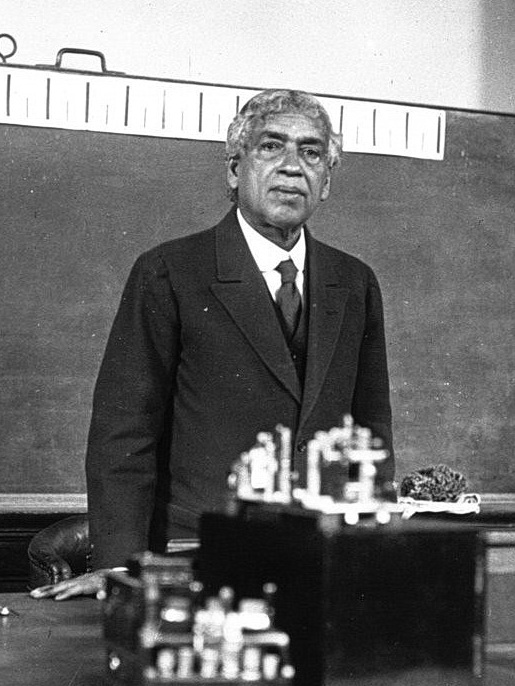
Jagadish Chandra Bose
J.C. Bose
Wireless, Semiconductors, Plant Biology
Rajeev Motwani
Rajeev Motwani
Algorithmic Search
Srinivasa Ramanujan
Srinivasa Ramanujan
Mathematical Genius
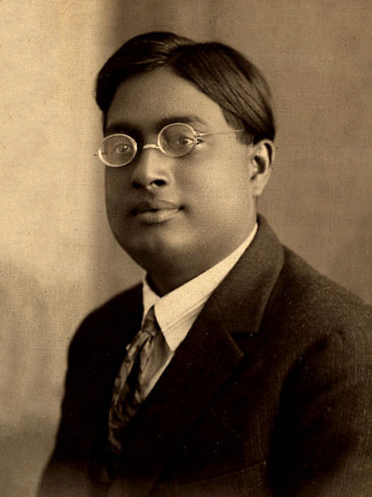
Satyendra Nath Bose
S.N. Bose
Quantum Mechanics
Amal Kumar Raychaudhuri
A.K. Raychaudhuri
Relativity Theory
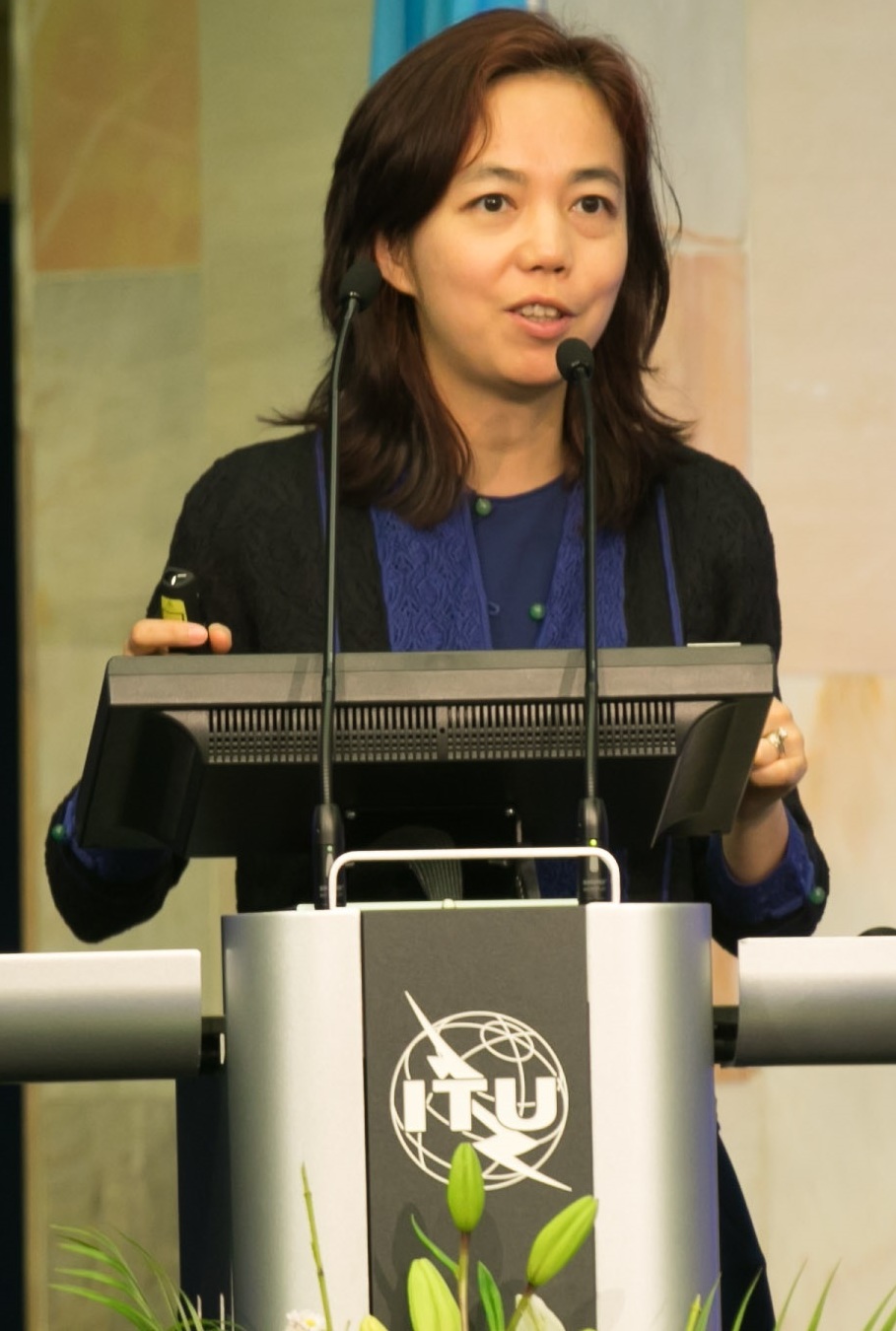
Fei-Fei Li
Fei-Fei Li
Computer Vision
Andrew Yao
Andrew Yao
Complexity Theory
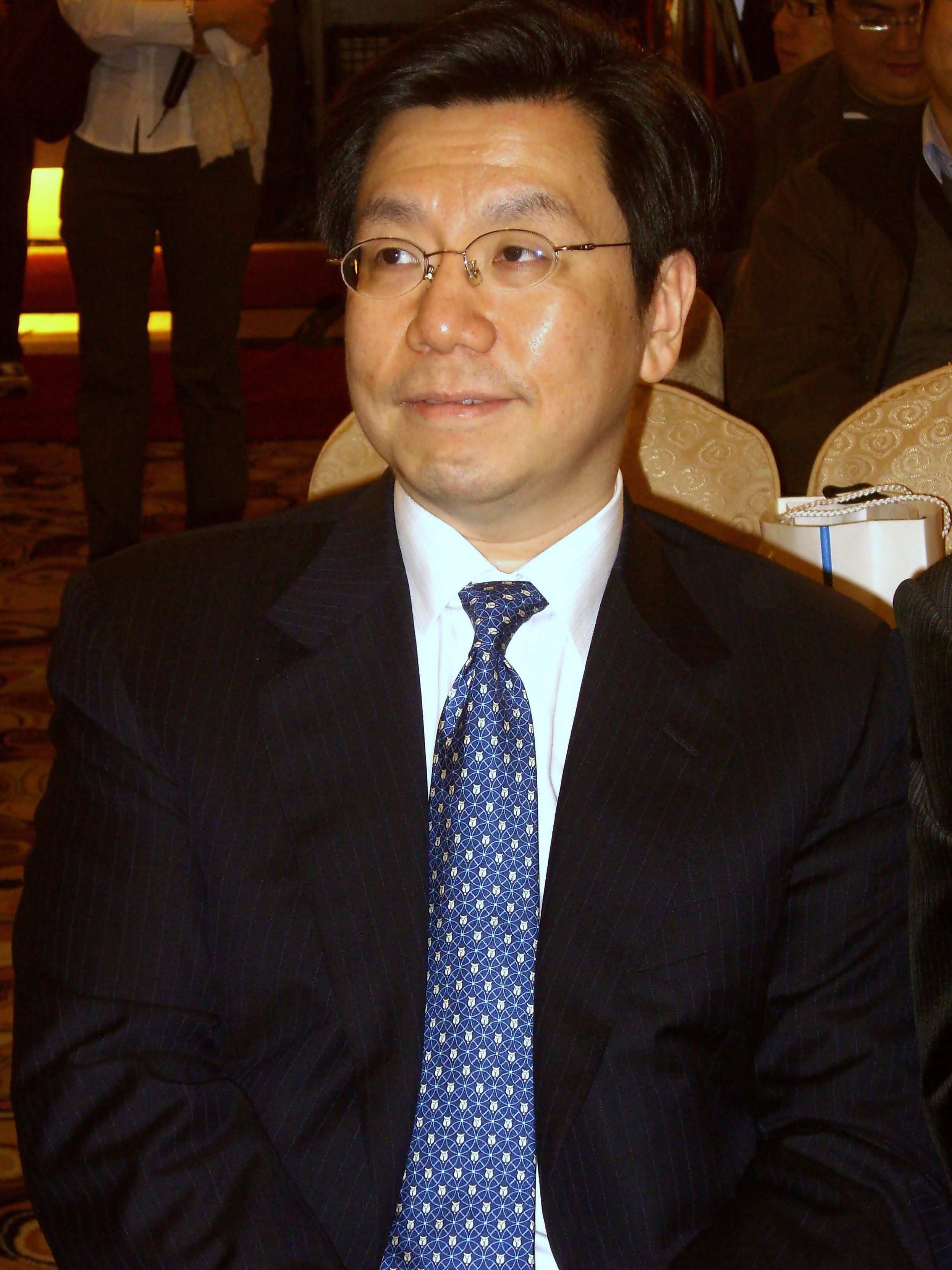
Kai-Fu Lee
Kai-Fu Lee
AI Research
Har Gobind Khorana
Har Gobind Khorana
Genetic Code & Synthetic Gene
Subrahmanyan Chandrasekhar
White Dwarfs & Collapse
Scientists whose fundamental discoveries remained on the margins—excluded from Nobel recognition and the prestige machinery.[attached_file:1]

Raychaudhuri: Parallel Genius, Divergent Recognition

Amal Kumar Raychaudhuri derived the Raychaudhuri Equation in 1955, now pivotal for understanding gravity and black holes.[attached_file:1] Like Bose, Raychaudhuri became known only after Nobel winners built on his work—but his own name never reached such heights.[attached_file:1]
Lev Landau (USSR)Amal Kumar Raychaudhuri (India)
Elite Soviet institutions; global recognition; Equations widely known.[attached_file:1] Kolkata, constrained resources; Institutional isolation; Equation unrecognized for decades.[attached_file:1]
  • Penrose & Hawking's Nobel-linked work relied on Raychaudhuri's equation, yet recognition lagged.[attached_file:1]
  • Unpublished manuscripts and local archives hold underused work.[attached_file:1]
  • Genius alone isn't enough—location and support shape visibility.[attached_file:1]
  • Reference: Amal Kumar Raychaudhuri — Wikipedia
"The Raychaudhuri Equation describes the focusing of geodesics in spacetime. But the recognition of the man himself was defocused—scattered across institutional barriers, geographic boundaries, and the prestige machinery that decides whose name gets written into history."
— Synthesis from academic history

Khorana & Chandrasekhar: Code and Collapse

Har Gobind Khorana rose from rural British India to help decode how triplets of nucleotides act as codons that direct the step‑by‑step assembly of amino acids into proteins, experimentally linking DNA sequences to protein synthesis.[web:15][web:23] His later synthesis of a complete functional gene outside a living cell anticipated the era of recombinant DNA and programmable biology, even as the prestige narratives of genomics tend to foreground elite Western labs and biotech firms rather than his journey from the colonial margins.[web:17][web:28]

Subrahmanyan Chandrasekhar calculated the mass threshold—now known as the Chandrasekhar limit, about 1.4 times the Sun’s mass—beyond which white dwarfs must implode, providing the mathematical bridge from dying stars to neutron stars and black holes.[web:29][web:30] For years his result was resisted and sidelined by senior European astronomers, illustrating how even precise, predictive theory can be slowed by hierarchy and gatekeeping rituals in elite astronomy.[web:29]

Machine Learning Pioneers: Foundational contributors to AI

Rajeev Motwani: The Invisible Bridge Builder — Professor Rajeev Motwani's genius lay in his ability to apply complex theoretical computer science to real‑world challenges.[attached_file:1] He co-authored "Introduction to Automata Theory, Languages, and Computation," a standard text that continues to educate generations of students about the mathematical foundations of computer science.[attached_file:1] Beyond Google, Motwani's influence spread throughout Silicon Valley.[attached_file:1] He was an influential angel investor and advisor to numerous startups, including the early development of what would become PayPal.[attached_file:1] He was also a winner of the prestigious Gödel Prize in 2001 for his work on the PCP (Probabilistically Checkable Proofs) theorem, a seminal result in complexity theory that has deep implications for the difficulty of finding approximate solutions to hard problems.[attached_file:1] Reflecting his immense but often unseen influence, Google co‑founder Sergey Brin stated, "Whenever you use a piece of technology, there is a good chance a little bit of Rajeev Motwani is behind it."[attached_file:1]

Fei-Fei Li01, 02, 03, Andrew Yao04, 05, and Kai-Fu Lee06—foundational contributors to AI and computational science whose work remains on the margins of global scientific recognition.[attached_file:1] Their innovations include facial recognition systems with world-leading accuracy and efficiency, novel neural network architectures such as ResNet variants developed at Microsoft Research Asia, advanced natural language processing models for Chinese language and character sets, and quantum computing research at institutions like the University of Science and Technology of China.[attached_file:1]

Fei-Fei Li, born in China and educated at Princeton, fundamentally advanced computer vision through the creation of ImageNet.[attached_file:1] This dataset enabled the deep learning revolution, powering breakthroughs in autonomous vehicles, medical diagnostics, and natural language technologies.[attached_file:1] Yet, these contributions—central to present-day scientific and technological progress—remain outside the Nobel's domain.[attached_file:1]

Andrew Yao is renowned for foundational work in computational complexity theory, including Yao's Principle, with enduring impact on modern cryptography and quantum computing.[attached_file:1] Despite the elegance and influence of his theoretical contributions, the Nobel has yet to recognize achievements in this sector.[attached_file:1]

Kai-Fu Lee, a pioneering figure in speech recognition and natural language systems, has led critical advances at Microsoft, Apple, and Google, and shaped AI research and investment through Sinovation Ventures.[attached_file:1] His leadership has helped define entire subfields of applied artificial intelligence.[attached_file:1]

Recognition, Margins, and the Illiberal Dynamics of Nobel Prizes

Recent research (von Zedtwitz et al., 2025, Research Policy) confirms a pattern you spotlight: Nobel Prizes systematically favor institutional prestige and geographic power, often at the expense of pioneering scientists whose original discoveries were marginalized or delayed in recognition.[attached_file:1]

Victims of Prestige and Illiberal Democratic Rituals:
  • J.C. Bose: Pioneered wireless communication, semiconductors, and plant biology, but found his contributions minimized as Western institutions rebranded and absorbed his breakthroughs.[attached_file:1] Sir Nevill Mott, Nobel Laureate in 1977 for his own contributions to solid-state electronics, remarked that J.C. Bose was at least 60 years ahead of his time. In fact, he had anticipated the existence of P-type and N-type semiconductors. [031]
  • S.N. Bose (1924): Formulated Bose-Einstein statistics, yet Nobel recognition went to others building on his core concepts.[attached_file:1]
  • Rajeev Motwani (2000s): Crucial to the foundation of algorithmic search, with his "origin story" obscured in the Nobel discourse dominated by major labs and corporate actors.[attached_file:1]
  • Amal Kumar Raychaudhuri (1955): Derived the Raychaudhuri Equation, now central in cosmology and black hole theory—but only gained visibility after Nobel laureates built on his work.[attached_file:1]
  • Srinivasa Ramanujan: Made extraordinary mathematical contributions from the margins, only receiving broad recognition posthumously.[attached_file:1]
  • Har Gobind Khorana (1922–2011): Indian-born molecular biologist who shared the 1968 Nobel Prize in Physiology or Medicine for helping decipher the genetic code and linking specific nucleotide triplets to amino‑acid assembly, later synthesizing the first functional gene outside a living cell.[web:23][web:19] Yet the public narrative of molecular biology tends to foreground elite Western institutions and biotech firms that followed, leaving Khorana’s journey from rural colonial margins to code‑breaker status comparatively under-told in the prestige machinery.[web:17][web:28]
  • Subrahmanyan Chandrasekhar (1910–1995): Astrophysicist who formulated the Chandrasekhar limit (≈ 1.44 M☉), predicting when a white dwarf must collapse into a neutron star or black hole and reshaping stellar evolution theory.[web:29][web:30] Initially dismissed by more established European astronomers, his insights were only fully recognized decades later, mirroring how peripheral origins and institutional bias can delay acknowledgment even for work that becomes central to modern cosmology.[web:29]

This cycle is not accidental: the Nobel system, operating as an illiberal democratic ritual, consistently confirms dominant power structures and signals which discoveries are "worthy."[attached_file:1] The historical evidence and current scholarship reveal repeated patterns of authority-building and exclusion—ensuring many foundational scientists remain invisible while their work is leveraged to legitimize elite institutions.[attached_file:1]

"Modern innovations often have profound transformative impact and societal implications. Yet, breakthroughs in fields such as facial recognition, artificial intelligence, or quantum computing may not evoke the universal acclaim or dramatic excitement associated with inventions like dynamite or nuclear science. Their omission from Nobel recognition nevertheless reveals how the Prize undervalues significant advances arising outside entrenched scientific sects." — RP[attached_file:1]

Reference: von Zedtwitz et al., "An analysis of Nobel Prize discoveries and their recognition," Research Policy (2025).[attached_file:1]

The Prestige Matrix: Recognition, Ritual, and Gatekeeping

Prestige, marketing, awards, and funding form feedback cycles where visibility outweighs originality.[attached_file:1] Pioneers like the above often stayed on the margins—they didn't fit the machinery.[attached_file:1]
  • Cultural signaling: Awards reflect what dominant culture values, not always what is most insightful.[attached_file:1]
  • Institutional dogma: Elite circles and media shape what counts as "important" or "revolutionary."[attached_file:1]
  • Prestige choreography: Prizes become ritual performances—even if breakthroughs come from beyond the official spotlight.[attached_file:1]
  • Hybrid system: Not pure capitalism, democracy, or technocracy—a curated, self-reinforcing matrix blending all three.[attached_file:1]
Prestige Matrix—Recognition Systems
Prestige Matrix—cycles of power, marketing, and institutional control.[attached_file:1]

Op‑Ed: Prizes as Instruments of Cultural Power

"Prizes should measure discovery, not manufacture authority."[attached_file:1]

For decades, prizes like the Nobel have been treated as impartial symbols of greatness.[attached_file:1] But examined critically, awards increasingly function as engines of cultural consolidation.[attached_file:1] They do not merely recognize discovery; they amplify institutional power, signal which narratives count, and funnel capital toward an elite circle.[attached_file:1] This is not classical market failure, but a prestige system—a ritualized tactic manufacturing authority, reinforcing dogma, and marginalizing alternative communities.[attached_file:1]

Conclusion: Wisdom Beyond Recognition

The Nobel Prize remains an important cultural institution, but it is not the sole arbiter of genius.[attached_file:1] By exposing gatekeeping, geographic bias, and selective amplification, we can honor deep insight wherever it arises.[attached_file:1] Funders and foundations can act now to create alternative recognition pathways that restore prizes to measuring discovery, not manufacturing authority.[attached_file:1]